Prose

City of Blinding Lights

THE STARSHIP Magellan was an oasis of existence in an ocean of nothingness. It screamed its loneliness through the inky blackness of space, crying out to the cold, distant stars.

The Captain stood on the bridge, gazing out at the blue speck that beckoned like an old, faithful friend. Thirty years of deep space exploration had taken their toll on him. He was no longer a young man and his greying temples and salt-and-pepper beard made sure he didn’t forget that. He focused on the distant speck again and forced his turbid thoughts to settle. And his mind moved upon silence.

And the Magellan rushed onward to Earth. Too long had it been in the empty voids of eternal night. It craved the noise of humanity, the sweet sad songs of Earth: the crackle of a small, warm fire deep inside a distant forest; the incessant hum of pulsing, breathing cities; the wind forever whistling across desolate deserts of Artic ice; all this and more, it craved, like a moth craves the flame. And onward it ploughed, delirious with thoughts of union, ignoring the ominous premonitions that seemed to almost weigh down its sleek silver exterior.

And as the blue planet drew close enough to fill the Captain’s viewport, a shudder of horror ran through him and the crew that crowded around behind him. For the Earth was dark. Not the quiet, gentle dark of a new moon but the harsh darkness of life terribly extinguished. For none of the great cities of Earth were lit up. And the silence that greeted the navigators was the same silence they had lived with for thirty years; they knew it all too well.

And the Magellan cried out in anguish and frustration and its cries were heard by the cold, distant stars, and the cold, dark planet and it sobbed quietly as the infinite loneliness of space silently closed in upon it.

Inspired by the greatest short story ever written, Arthur C. Clarke’s Songs of Distant Earth.
Standard
Prose

Of Bensons and Dunhills

First published in the Grammarian, 2010.

GRAVEL crunches underfoot as the two boys gradually, deliberately, make their way up the mound of stones to the building. Bags of cement, bits of wiring and the odd construction tool litter the concrete floor. Although the streetlight’s glow barely reaches in, the boys continue, scarcely glancing at the ground. They reach the other end and sit opposite each other in the small opening. Ahead, the city stretches on. Above, the Karachi night sky glows with the pulsing beat of eleven million souls.

They sit in silence. In that gentle silence of old friends who know each other better than they know themselves. Far away, a dog barks once and is silent. And as the moon watches on, they begin to talk.

They talk of all that boys their age talk of; of cars and cell phones, of grades and girls, of homework, tuitions and, of course, football.

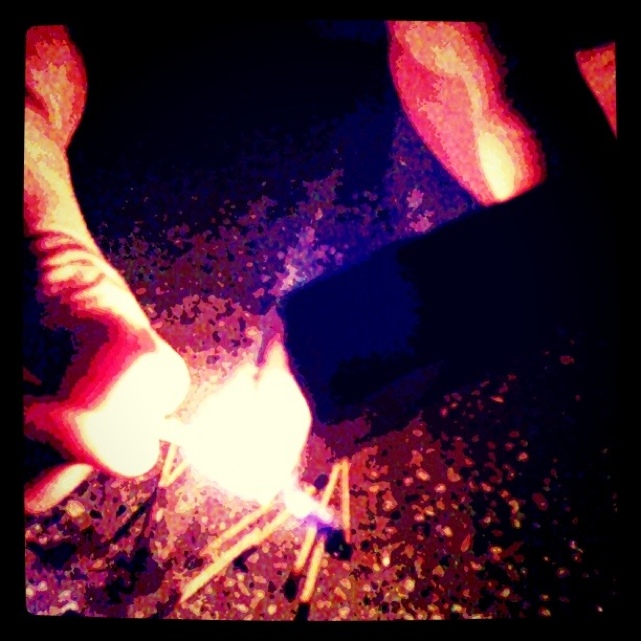
One of them reaches into his pocket; a packet of cigarettes. He takes out a Dunhill and, carefully, places the rest of the pack on the rocky floor. A matchstick alights, casting its warm glow in the darkened skeleton of a room. Harsh concrete glares back at the intruding brightness. The cigarette is lit, the match thrown away, and the comfortable silence sets in once more.

He silently offers the Dunhill to his companion. His companion silently refuses. This is their routine, a tradition that has been enacted every night they meet, for as long as they can remember.

The city watches. A puff of smoke. A glowing cigarette end. The sound of silence. That’s all it sees.

The softly glowing point gets up and moves through the dark towards a wall. It illuminates the fading names sprayed with cheap, blue, fifty-rupee spray paint last summer. He runs his hand over the names. As if trying to revive them. All he succeeds in doing, is smudging them in further.

His companion stands too, brushes the dust off of his jeans and looks out at the indigo sky. The city glitters in the night, its shiny, glinting cars flit across the road taunting the solitude in the building.

The still smouldering stub of the Dunhill flies through the air. It lands in a corner next to more Dunhills, Bensons and the odd matchbox. It’s time.

Before they depart, they place the matchbox, half-open, on the floor. Then, they light their final match for the night and place it inside the half empty box. They watch as the fire burns, softly at first, then igniting into a blazing crescendo that turns into ash within moments.

In that flash of light they glimpsed many things beyond their years. They saw how insignificant life is, how transient and brief. But they saw too, how, for that instant, the impenetrable dark had been light up and, for a fraction of a moment, night had almost become day.

And then they turned away from the building, and walked onwards, till they were swallowed into the night.

Standard