Prose

Ascension

I kneel in the nights
Before tigers that will not let me be;

What you were
Will not happen again.

The tigers have found me:
And I do not care.

Charles Bukowski, For Jane

WHEN I was younger and religion was more than a word, I would take long walks while they slept, hoping to find something they’d never see. Night after night, I’d stalk the streets in search of something more—past dingy alleys with rabid dogs; past old men whispering sun-kissed songs; past small, warm houses with doors shut tight, a wisp of smoke curling into the darkling sky. And as dawn would break and the world awaken, I would trudge home tired and sleepy and a little broken.

This went on for a while until it seemed that there was nothing left to break and that final night even the dogs gave up their growling out of pity, for what is more pathetic than the one who has lost his beloved? Cold, hungry and a little soul sick, I vowed that that night would be the last and that my journey would finally end, one way or another. I slid a hand into my pocket until it touched steel and, thus resolved, set off towards the bay.

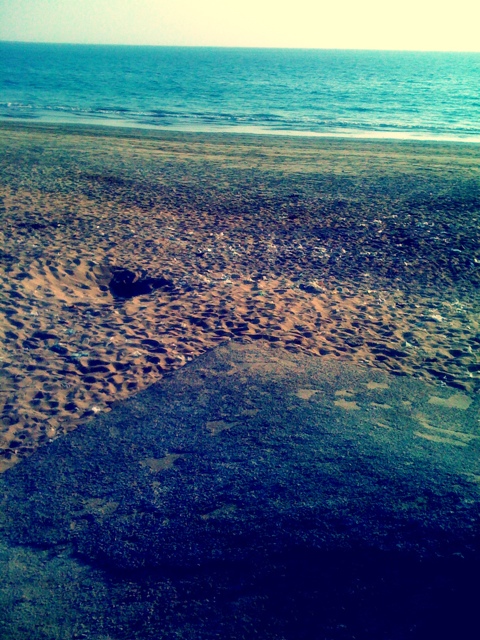
The night was bitterly cold and the desolate stretch of beach held no redemption. The fishermen’s favela was silent and the only lights were at the whorehouse in the distance. I looked out at the taunting waves. The dark waters had no metaphors to offer. A drunk stumbled out of the brothel and collapsed on the sand. I stared at him for a long, long while. Then, without looking back, I ran.

***

THE old city. I doubled over to catch my breath and coughed twice, sweat dripping onto the cobblestone streets. The revolver dug into my side. This is a good a place as any.

“Are you lost, my son?”

I looked up. Something moved in one of the dark recesses. An old man shuffled out, wearing the garb of a Sufi.

“I am not lost. I am tired.”

“Tired?”

“Yes.”

“Ah, I see.”

“I don’t think you do, baba.”

“I see that there is much sadness in your eyes.”

“You are a man of God. I do not wish to blasphemy before you.”

“Have you heard of Hallaj?”

“Of course.”

“Then speak your mind with ease, and do not use that word ‘blasphemy’ again. It is a word of the ignorant.”

***

And so it was that a Sinner found God in the dust of an ancient city by the sea.

20131016-010019 am.jpg

Standard
Prose

Life is a Caravanserai

Think, in this batter’d Caravanserai

Whose Doorways are alternate Night and Day,

How Sultán after Sultán with his Pomp

Abode his Hour or two, and went his way.

Omar KhayyámThe Rubaiyat of Omar Khayyám

ONCE upon a time, there was a great empire. The empire was so vast that its ends were shrouded in mystery and barbarian lands clung to its edges like rotting vestiges. Sometimes, a few armed bands would venture near the borders — like unruly children — craving acknowledgement. But for the most part, the empire lived in peace and harmony.

Now, there was a righteous king who ruled this land and one day he decreed that a great road was to be built from one end of the empire to the other. Since the land was as wealthy as it was large, this presented no great fiscal challenge, merely a logistical one. Soon, the dedicated — though rusty — bureaucracy creaked into action and, reluctantly, the first stones were laid.

Many moons waxed and waned before the final stones were — equally reluctantly — placed, but the job was done and the great black road stood resplendent as a testament to the magnificence of the empire.

The king, however, saw that though the road had made trade infinitely easier, there was still one problem left to tackle. The poorer merchants couldn’t afford to travel, not because the road was taxed but because the cost of the journey included food and lodging. The king was a good man and so he decided that the funds of the state would be best applied to easing the difficulties of his subjects, in the hopes that they would adore him, instead of merely being indifferent. Consequently, the first inns were constructed; a hard day’s journey from each other by the side of that great road.

Now, finally, the bureaucrats had done something truly marvellous. These inns, or caravanserais, were nothing like the crowded, claustrophobic cities that dotted the landscape, rife with crime. No, these were small and warm and safe, filled with the promise of good food, good wine and a soft bed under the stars.

As evening approached and the ancient fires of the sun cooled, the weary traveller would see the caravanserai beckon to him, like a gentle mistress, whispering of sleep and sustenance. And as he lay down, gazing up at the stars, he would ponder on the swirl of milk spilled by a divine hand, carving a path across the night sky. Did he look at that far, far older road and wonder where it began, where it led and who had traversed its many paths, planets and mysteries? Or did his weary eyes wander, just before sleep overtook them, to the far end of the caravanserai and the battered doorway of Tomorrow?

Standard
Prose

One Last Sunset

A BOY. A girl. The flaming passions of the setting sun reflected in their young faces.

He turns. Sweet salt air. A hint of vanilla. Her dark eyes meet his.

Eternity wraps herself in a moment.

In that tangible instant, he sees another face from another time. A strikingly similar face from an incredibly, indescribably distant time.

And he is filled with the anguish of the ages and the regrets of humanity clutch at his heart.

Just as his forefathers had before him and just as his sons will after he is dust, the boy sees — in the depths of his love and in the wells of human emotion — that fatal flaw, that transience which is the curse of humanity.

The boy shivers, imperceptibly, as a warm hand slips into his. And he watches quietly as the dying sun slowly slips beneath the dark, dark horizon.

20120401-082702 PM.jpg

Standard
Prose

Sandcastles

A LITTLE girl sits in the warm sand. The wind pulls at her hair, widening her big, bright smile as she beams at the sun and the sand and the waves. She gets up and runs to the water, falling over herself in her eagerness to touch it. Laughing, she dusts herself off; nothing can dent that radiant smile.

The little girl wants to build a sandcastle. She sits near the water’s edge, patiently moulding mounds of pliant sand. Finally, she sits back, admiring her hard work. The little girl imagines how it would feel to live in a castle — a princess — mistress of a sun-kissed realm. She really, really wants to be a princess; just like those fair Barbie dolls she’s seen in those large, air-conditioned cars. But in her eager innocence the little girl doesn’t notice the waves pulling at her faded rags. She doesn’t notice until they’ve begun to devour her little castle. But by then, it’s too late.

She watches quietly as the waves tear down her castle of dreams. She wants to cry, to scream, but there’s dad in his little fishing skiff. He doesn’t like it when she cries. The little girl hopes he has some fish for dinner; she hasn’t eaten since yesterday. She looks at the castle again and, in a moment of sudden defiance, smiles as wide as she possibly can. She doesn’t need a stupid sandcastle. Her father sees her, laughs and picks her up. No one notices a little tear trickle down her little cheek.

Another wave breaks on shore, burying the remains of the shattered sandcastle.

20120401-080531 PM.jpg

Standard
Prose

Rome

First published in the Grammarian, 2012.

THE CAMPFIRE flickered, dancing like a nimble young girl away from the advances of the cold, biting wind. The grey-haired sentry pulled his scarlet cloak tighter around him. ‘Old friend,’ he whispered softly to the fire, ‘old friend once I burned with life too. I do not think I will be able to dance for much longer, as you do.’ He lapsed into silence, exhausted by the weight of his thoughts, and closed his eyes.
Gently, he caressed the coarse sand beside him. ‘You are rough,’ he said to the sand, ‘but I would be too if I had been scorched by the sun, every day since the creation of the world. Yes,’ he paused, ‘you are rough, but you are honest and pure and you only feel as you do because of the tough life you lead. You and I are not so different,’ he smiled.

And then something strange happened. Perhaps he feel asleep. Perhaps it was a mirage. Or a trick played by one of the djinn of the desert. But this much is certain that as the sentry blinked dreams from his weary lashes, his half-open grey eyes saw a dark shape crossing just outside the warm, safe halo of the flickering fire. It was darker than the surrounding night, and paused for moment, silent; motionless. Then it glided on, becoming one of the many unsolved mysteries of the desert that have been padding at the edge of man’s sanity since time immemorial and shall remain long after man is forgotten dust.

And the sentry’s eyes closed, tired from years of gazing at alien shores far from home, and he slipped into one of those strange sleeps of the body that tire the mind and pass the time and do little else.

And when he awoke later, expecting dawn, all he saw was the same dark night, blowing over infinite miles of dark desert sand. And he blinked, wishing desperately for the dawn to come, but the night only swirled tighter around him, blowing out his fire and tugging at his scarlet cloak. And then the old man knew that dawn would never come so he pulled his cloak tighter around him and closed his eyes and drifted into that sleep that rests the body and rests the mind and from which one need never again awake.

Standard
Prose

City of Blinding Lights

THE STARSHIP Magellan was an oasis of existence in an ocean of nothingness. It screamed its loneliness through the inky blackness of space, crying out to the cold, distant stars.

The Captain stood on the bridge, gazing out at the blue speck that beckoned like an old, faithful friend. Thirty years of deep space exploration had taken their toll on him. He was no longer a young man and his greying temples and salt-and-pepper beard made sure he didn’t forget that. He focused on the distant speck again and forced his turbid thoughts to settle. And his mind moved upon silence.

And the Magellan rushed onward to Earth. Too long had it been in the empty voids of eternal night. It craved the noise of humanity, the sweet sad songs of Earth: the crackle of a small, warm fire deep inside a distant forest; the incessant hum of pulsing, breathing cities; the wind forever whistling across desolate deserts of Artic ice; all this and more, it craved, like a moth craves the flame. And onward it ploughed, delirious with thoughts of union, ignoring the ominous premonitions that seemed to almost weigh down its sleek silver exterior.

And as the blue planet drew close enough to fill the Captain’s viewport, a shudder of horror ran through him and the crew that crowded around behind him. For the Earth was dark. Not the quiet, gentle dark of a new moon but the harsh darkness of life terribly extinguished. For none of the great cities of Earth were lit up. And the silence that greeted the navigators was the same silence they had lived with for thirty years; they knew it all too well.

And the Magellan cried out in anguish and frustration and its cries were heard by the cold, distant stars, and the cold, dark planet and it sobbed quietly as the infinite loneliness of space silently closed in upon it.

Inspired by the greatest short story ever written, Arthur C. Clarke’s Songs of Distant Earth.

Standard
Prose

Of Bensons and Dunhills

First published in the Grammarian, 2010.

GRAVEL crunches underfoot as the two boys gradually, deliberately, make their way up the mound of stones to the building. Bags of cement, bits of wiring and the odd construction tool litter the concrete floor. Although the streetlight’s glow barely reaches in, the boys continue, scarcely glancing at the ground. They reach the other end and sit opposite each other in the small opening. Ahead, the city stretches on. Above, the Karachi night sky glows with the pulsing beat of eleven million souls.

They sit in silence. In that gentle silence of old friends who know each other better than they know themselves. Far away, a dog barks once and is silent. And as the moon watches on, they begin to talk.

They talk of all that boys their age talk of; of cars and cell phones, of grades and girls, of homework, tuitions and, of course, football.

One of them reaches into his pocket; a packet of cigarettes. He takes out a Dunhill and, carefully, places the rest of the pack on the rocky floor. A matchstick alights, casting its warm glow in the darkened skeleton of a room. Harsh concrete glares back at the intruding brightness. The cigarette is lit, the match thrown away, and the comfortable silence sets in once more.

He silently offers the Dunhill to his companion. His companion silently refuses. This is their routine, a tradition that has been enacted every night they meet, for as long as they can remember.

The city watches. A puff of smoke. A glowing cigarette end. The sound of silence. That’s all it sees.

The softly glowing point gets up and moves through the dark towards a wall. It illuminates the fading names sprayed with cheap, blue, fifty-rupee spray paint last summer. He runs his hand over the names. As if trying to revive them. All he succeeds in doing, is smudging them in further.

His companion stands too, brushes the dust off of his jeans and looks out at the indigo sky. The city glitters in the night, its shiny, glinting cars flit across the road taunting the solitude in the building.

The still smouldering stub of the Dunhill flies through the air. It lands in a corner next to more Dunhills, Bensons and the odd matchbox. It’s time.

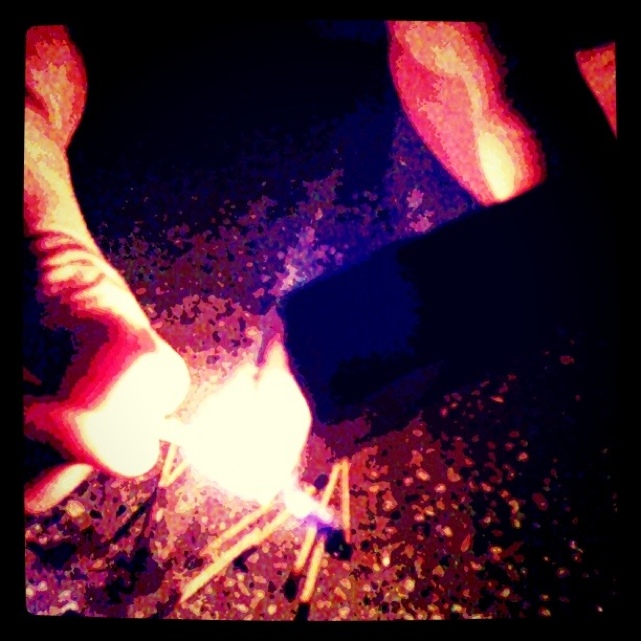
Before they depart, they place the matchbox, half-open, on the floor. Then, they light their final match for the night and place it inside the half empty box. They watch as the fire burns, softly at first, then igniting into a blazing crescendo that turns into ash within moments.

In that flash of light they glimpsed many things beyond their years. They saw how insignificant life is, how transient and brief. But they saw too, how, for that instant, the impenetrable dark had been light up and, for a fraction of a moment, night had almost become day.

And then they turned away from the building, and walked onwards, till they were swallowed into the night.

Standard